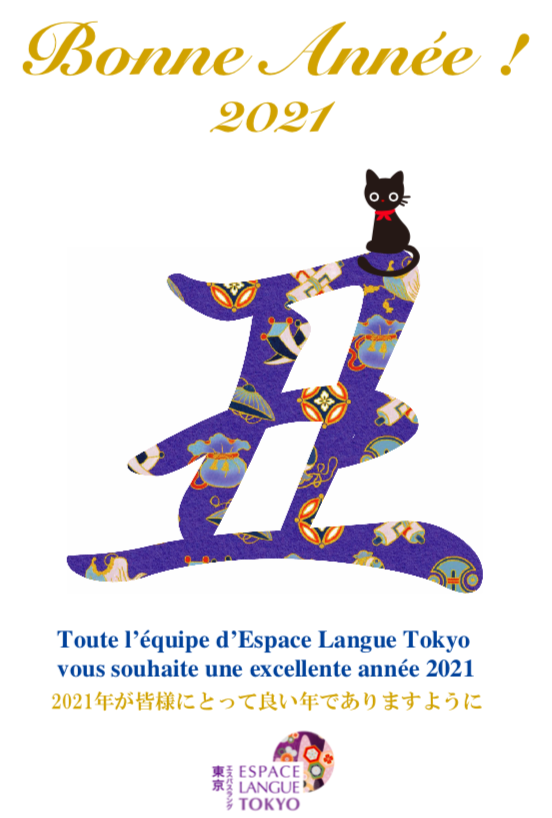
Do you know how to express your greetings in Japanese?
In Japan, every celebration has its own customs. The New Year is no exception to this rule, as demonstrated by the various expressions used to offer New Year's greetings.
A quick overview to avoid missteps!
Before January 1st
This is the first major distinction: different formulas are used before and after the transition to the new year.
Thus, as long as bonenkai (忘年会, end-of-year parties) are still in use and nenmatsu osoji (年末の大掃除, year-end cleaning) has not yet been done, we will say "« 良いお年をお迎えください” (yoi otoshi wo omukae kudasai). This expression is often reduced to just the first part «良いお年を» (yoi otoshi wo), literally, "have a good year".
From January 1st
Once the new year has begun, one makes one's first visit to the shrine or temple called hatsumōde (初詣 or 初詣で), the first calligraphy of the year is written. kakizome (書き初め) and we offer our greetings using the following expression: あけましておめでとうございます(akemashite omedetō gozaimasu), literally "congratulations on the new year that begins".
Depending on the context, this first sentence may be followed by the very conventional: 今年もよろしくお願いします (kotoshimo yoroshiku onegai shimasu), to express your gratitude for the coming year. This formula could for example be added to the office, during the first days of the year, thus giving: あけましておめでとうございます。今年もよろしくお願いします (Akemashite omedetō gozaimasu. Kotoshimo yoroshiku onegai shimasu).
In an informal setting, among friends for example, one would more likely say: “あけおめ!ことよろ!” (Ake ome! Koto yoro!).
Now you're all set to wish someone a happy new year in Japanese!