If you have already been to the Land of the Rising Sun, you are probably familiar with the JR Pass. Today, we're going to talk about another pass, the JR East Pass. It will be perfect if you want to stay in the archipelago with a visa other than a tourist visa.
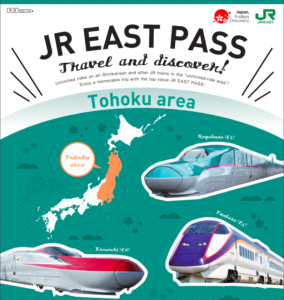
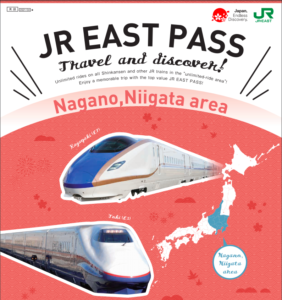
Despite the current challenging travel climate, JR Airlines has unveiled its new offer to make travel easier for foreign residents. And it's a small revolution!
Until now, only foreign visitors with a tourist visa could take advantage of special fares using the JR Pass. But since April 1, 2021, foreign residents have also been able to benefit from the JR Pass. East Pass to travel throughout the northern part of Honshu, the main island of Japan, which includes the cities of Tokyo, Osaka, Kyoto, Hiroshima, Nara and Nagoya.
What does the JR East Pass include?
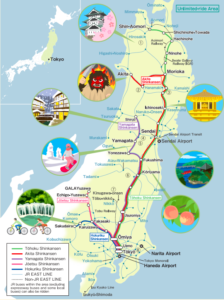
This pass allows unlimited travel for 5 consecutive days on JR lines (Shinkansen, local trains, express trains, subway, buses, etc.) in the Nagano, Niigata, and Tohoku regions (Kanto is also included). Having trouble locating these regions? Take a look at this map:
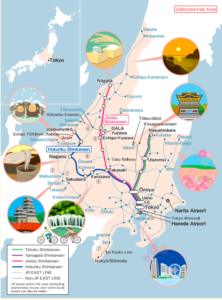
How much does it cost?
The JR East Pass Tohoku costs 20,000 yen, or just over 150 euros. The JR East Pass Nagano-Niigata costs 18,000 yen (approximately 135 euros).
How do I obtain it?
The JR East Pass is exclusively for foreigners. The only requirement to obtain this pass is a valid foreign passport. With your passport in hand, simply go to the dedicated JR kiosks (multilingual) located in major train stations (Shibuya, Shinagawa, Shinjuku, Tokyo, Ueno) or airports. Obtaining this valuable pass will only take a few minutes. Quick and efficient!
Ideas for walks in the region * of Tohoku (東北地方, Tōhoku-chihō)
 Tohoku offers some of the most authentic rural landscapes in Japan. The northeast of the archipelago is a wild region with strong traditions and a rich cultural heritage. More rural than Tokyo, the region blends spectacular scenery, historical sites, artisanal sake, and outdoor activities such as rafting, hiking, and skiing.
(source: https://www.japan.travel/fr)
Ideas for walks in the prefecture * of Niigata (新潟県, Niigata Prefecture)
 Winter sports, hiking trails, hot springs, seafood, rice, and sake: the prefecture is brimming with natural charms. Beyond the mountains, picturesque beaches stretch along the coast (don't miss the rustic Sado Island!). Seafood, rice, and sake are local specialties.
(source: https://www.japan.travel/fr)
Continue reading on the topic of [Practical Japan]!
* Regions and prefectures of Japan
The main administrative division of Japan is the prefecture. However, the concept of region exists, especially at the geographical and cultural level.
The regions of Japan (日本の地方, nihon no chihō) are therefore not official administrative divisions. However, they are frequently referenced: on maps, weather reports, etc. Many institutions and companies also incorporate the name of their region into their name (Kinki Nippon Railway, Chugoku Bank, Tohoku University, etc.). Each of the eight regions (Hokkaido, Tohoku, Kantō, Chūbu, Kansai, Chūgoku, Shikoku) include several prefectures, with the exception of the Hokkaido region, which consists only of the prefecture of the same name.
The prefectures or departments from Japan (都道府県, todōfuken) are the 47 constituencies The administrative and territorial divisions of Japan, created in 1871, are divided into four types (identified by the last character of their official Japanese name in kanji). While these four designations corresponded to a real difference in status before 1947 (with specific powers and responsibilities), the Local Self-Government Act, while retaining the four-part terminology, no longer distinguishes them administratively.
Source: https://fr.wikipedia.org/regions_of_Japan/prefectures_of_Japan