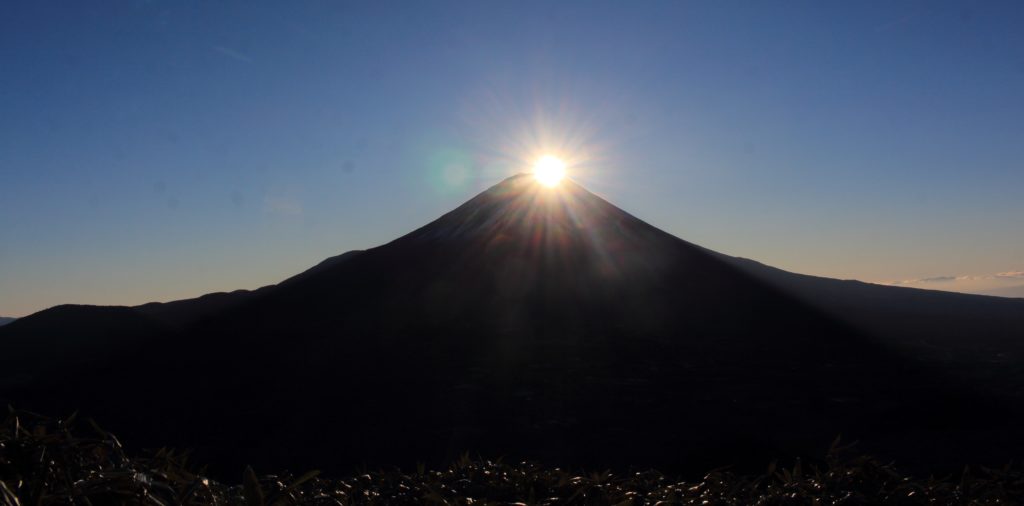
No, the Diamond Fuji is not a precious stone… but it is a true natural gem!
Mount Fuji (富士山, Fujisan), This majestic mountain, which rises to 3,776 meters, inspires dreams around the world. While climbing this famous mountain requires some preparation (see here), those less adventurous can also observe it from Tokyo.
What is Diamond Fuji?
January is one of the best times to enjoy the postcard-perfect panorama of Mount Fuji adorned with its snow-capped peak. It is also in January that a breathtakingly beautiful phenomenon occurs: Diamond Fuji (ダイヤモンド富士 (daiyamondo-fuji)).
Twice a year (in January and November), for a few days, Japan's two iconic symbols, the sun and Mount Fuji, are united. For a few minutes, the sun's path aligns with the summit of the mountain, creating an absolutely breathtaking sunset (weather permitting). The sun seems to frame the peak of the sacred mountain, shining brilliantly.
The emblems of Japan reunited
Mount Fuji, this volcano with its almost perfect cone, is not only a geographical landmark but also (and above all) a spiritual landmark, majestic and calming. Its last eruption dates back to 1707 and since then it has been dormant (but it is still active!).
The sun's role as a symbol of Japanese identity stems from Japan's founding myths, as the disappearance of the sun is one of the major events in mythology. Indeed, the sun goddess Amaterasu, exasperated by the rude behavior of her brother Susano, the storm god, retreated into a cave, plunging the world into darkness. Fortunately, the gods managed to lure Amaterasu out of the cave, and she once again illuminated the world.
Where to admire Diamond Fuji (ダイヤモンド富士 (daiyamondo-fuji)?
If you wish to stay in the city, we recommend the observatories of the Tokyo Skytree, Tokyo Tower, Sunshine 60, Bunkyo Civic Center (free) or the Tokyo Metropolitan Government Building (free).
If you prefer to enjoy a natural setting, Mount Takao, on the outskirts of Tokyo, is a most pleasant option.