Japan's National Day, also known as Emperor's Birthday (Tennō Tanjōbi), is celebrated on the birthday of the reigning emperor. Its date therefore changes with the accession of each new emperor. Following the enthronement of Naruhito (徳仁) in May 2019, the national holiday is celebrated on February 23rd.
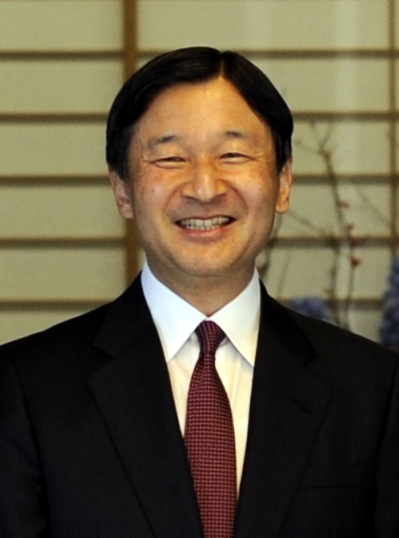
The current emperor, Naruhito, succeeded his father, Akihito, on May 1, 2019. He became the 126th emperor to ascend the Chrysanthemum Throne. His accession marked the beginning of the Reiwa era, the era of "Venerable Harmony." Following his enthronement, the national holiday of the archipelago is February 23. However, April 29, the birthday of Emperor Shōwa (1901-1989), remains a public holiday: this is Shōwa no Hi.
Status and role of the emperor over the years
Until 1945, emperors were considered living deities, heads of the Shinto religion, and absolute rulers. After World War II, the United States forced the emperor to renounce his divine status. He nevertheless retained his role as supreme leader of Shinto, the majority religion in Japan.
In 1947, Japan adopted a new constitution. The first article defined the emperor as "the symbol of the State and of the unity of the people." He no longer possessed any political power or influence, and his role was limited to official representation—meetings with heads of state, presiding over events and awarding decorations, missions abroad, promotion of traditional culture, etc.
The imperial lineage
According to the mythological foundation of Japan, the first emperor, Jinmu (660 BC), was descended from the Japanese goddess Amaterasu (Sun goddess).
Since Jinmu, the same imperial family has reigned over Japan (Japanese "imperial line" or kōtōSuccession to the imperial throne follows the agnatic principle. Regardless of the sovereign in question, the most important rule is that tracing one's genealogy through the paternal line inevitably leads to Jinmu. Thus, all Japanese emperors are in "direct" lineage from the primordial emperor, a tradition that has persisted for over 26 centuries. While it is impossible to historically prove the veracity of this narrative, the power of this principle remains deeply entrenched. In a constantly evolving world, the preserved imperial lineage therefore holds great symbolic value for Japan.
(Source : Wikipedia)
The Emperor Day by Day
Since the Meiji era, the title of the Emperor of Japan has been "tennō" (天皇), or "Heavenly Emperor." He lives in the Kōkyo Palace in central Tokyo and leads a life secluded from the public and the media. His daily routine is structured around Shinto rituals and diplomatic duties. He only appears in public on his birthday and for the New Year (January 2nd).
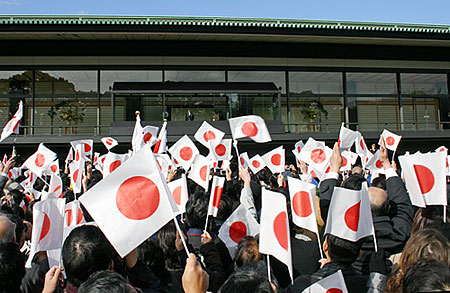
Traditionally, the Imperial Palace opens its doors to the public on the Emperor's birthday. On this day, the sovereign receives congratulations and wishes for a long life from the crowds.
gathered in the courtyard.
Continue reading!
Showa no hi (昭和の日): the commemoration of Emperor Showa
«kenkoku kinen no hi», day of commemoration of the founding of Japan