Festivals and other celebrations are part of the charm of the Japanese archipelago. Today, let's discover the Golden Dragon Dance (金龍の舞, kinryu no mai), which takes place twice a year at Sensō-ji Temple (金龍山浅草寺, kinryū-zan sensō-ji). Located in Tokyo's Asakusa district, it is the oldest temple in the Japanese capital.
The traditions surrounding the Golden Dragon Dance
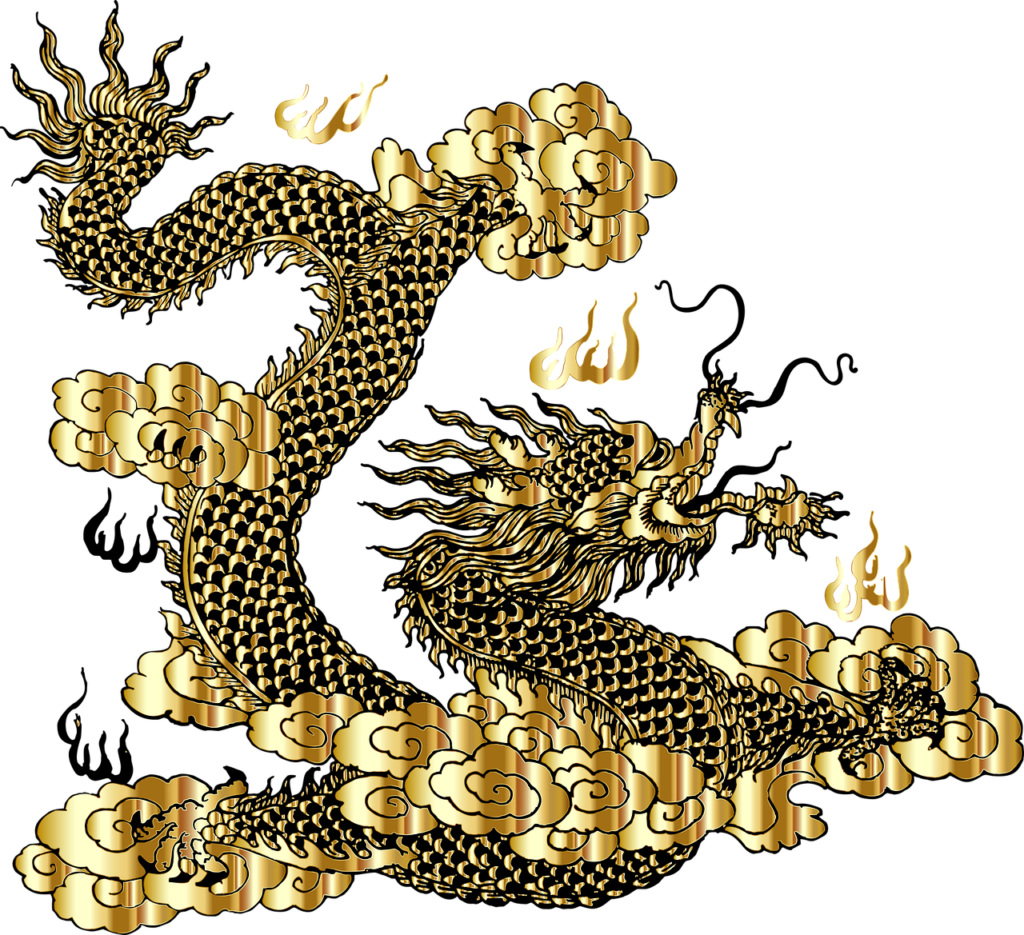
Imagine… 8 dancers carrying a golden dragon with 8888 scales, 18 meters long and weighing 88 kg, dancing to the sound of geisha flutes and shamisens.
This ceremony, called the Golden Dragon Dance (金龍の舞, kinryu no mai), takes place on March 18 and October 18. March 18 commemorates Honzon-jigen-e (本尊示現会), the founding event of Tokyo's first temple. On October 18, the dragon appears for Kiku Kuyō, the chrysanthemum ceremony.
You've probably noticed the recurring number 8… no, it's not a coincidence! In Buddhism, 8 is considered lucky. It can be associated with the eight petals of the lotus flower or the Noble Eightfold Path leading to nirvana. Furthermore, in Japan, the flared shape of the kanji for 8 (八) suggests prosperity.
The legend associated with the Golden Dragon…
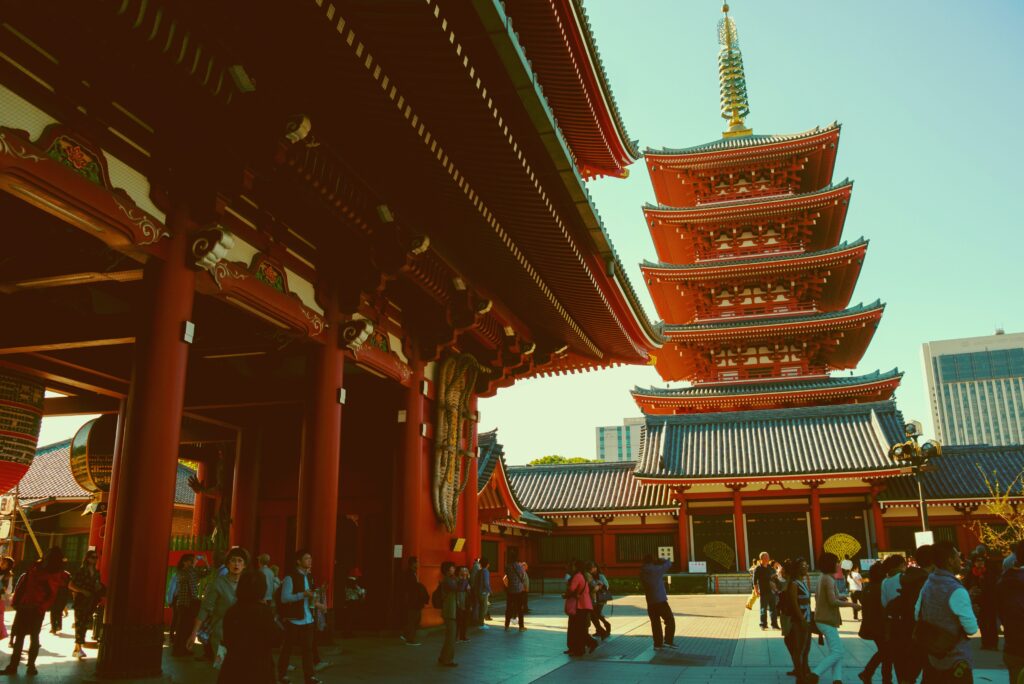
The Golden Dragon Dance (金龍の舞) takes its name from Kinryu-zan (金龍山), the mountain name associated with Sensō-ji Temple.
Legend has it that on March 18, 628, two brothers fishing in the Sumida River found a statuette of the goddess Kannon in their nets. The village lord converted his house into a modest temple and placed the statuette there. In 645, a Buddhist priest arrived in the area and built Sensō Temple for the statue. Following a dream, he hid the statue in the temple; it is said to remain there to this day.
Kannon (観音, the goddess of mercy) is therefore the patron deity of Sensō-ji Temple. While the Golden Dragon Dance (金龍の舞) dates back to the Heian period (794-1185), it has only been performed at Sensō-ji since 1958. It marks the revival of Tokyo's oldest temple, which was destroyed during World War II.
Access to time at Sensō-ji
The closest subway station to Senso-ji is Asakusa Station (Asakusa line A18, Ginza line G19, and Tobu Skytree line TS-01). The Tsukuba Express Asakusa Station, on the line of the same name, is also very close.
Continue reading!
Kanbutsue & Hana Matsuri: Celebration of Buddha's birth & flower festival