To mark the 50th annual "station" bento gathering, or Ekiben in Japanese, this weekend, we'll be revisiting the origins and unique characteristics of this small box sold in most Japanese train stations. Finally, we'll explore why they remain so popular despite competition from conbinis (small supermarkets the size of a typical Japanese grocery store, usually open 24/7) and other fast-food outlets.
A little bit of Japanese
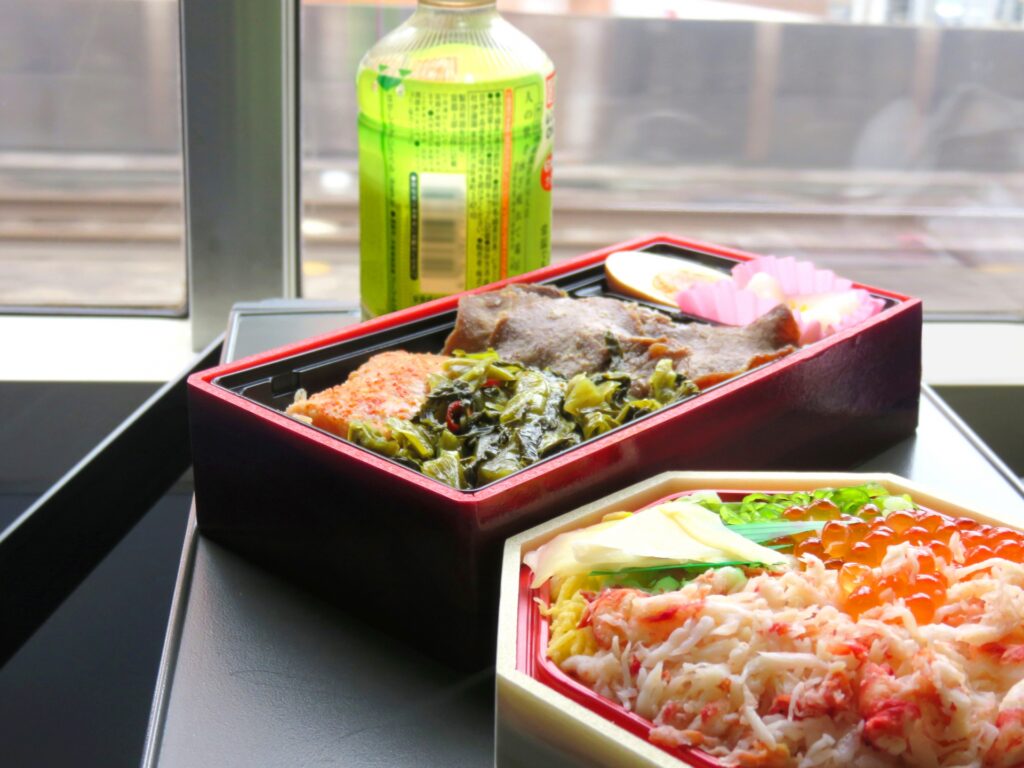
Let's start with a little Japanese. The term Ekiben, or 駅弁, is formed from two kanji: 駅 (eki), meaning train station, and 弁 (ben), from bento, a small lunchbox that has been familiar in France for about ten years. Ekiben is thus a contraction of "train station" and "lunchbox." However, unlike traditional bento boxes, Ekiben are only found in train stations, specifically those serving the famous Shinkansen bullet trains. Their form and contents are as varied as the number of prefectures and their specialties. From fresh salmon, mackerel, or tuna sashimi to the most prized Japanese meats, Ekiben is sure to become a part of your travels.
A short story
As mentioned above, Ekiben are found almost exclusively in stations served by Shinkansen trains. The reason for this lies in a century ago when train journeys were much longer than they are today. Meals were of paramount importance and helped passengers endure the long hours of travel. Indeed, it wasn't possible to leave the train mid-journey to buy a snack.
The first Ekiben appeared at the end of the 19th century with the development of the railway in Japan. Initially, they took simple forms such as lightly seasoned rice balls. Their popularity peaked in the 1980s but quickly declined with the rise of air travel. Indeed, flying became more appealing for long distances.
Despite a decline in their consumption, Ekiben are still an integral part of train stations and allow you to have a condensed selection of local specialties in a small box at your fingertips.
A wide variety
Ekiben typically take the form of a Makunouchi, a bento box with a rice base, seaweed, grilled fish on top, and pickled vegetables. But ekiben are much more than that. They are prized above all for one of their defining characteristics: they are made locally with local ingredients.
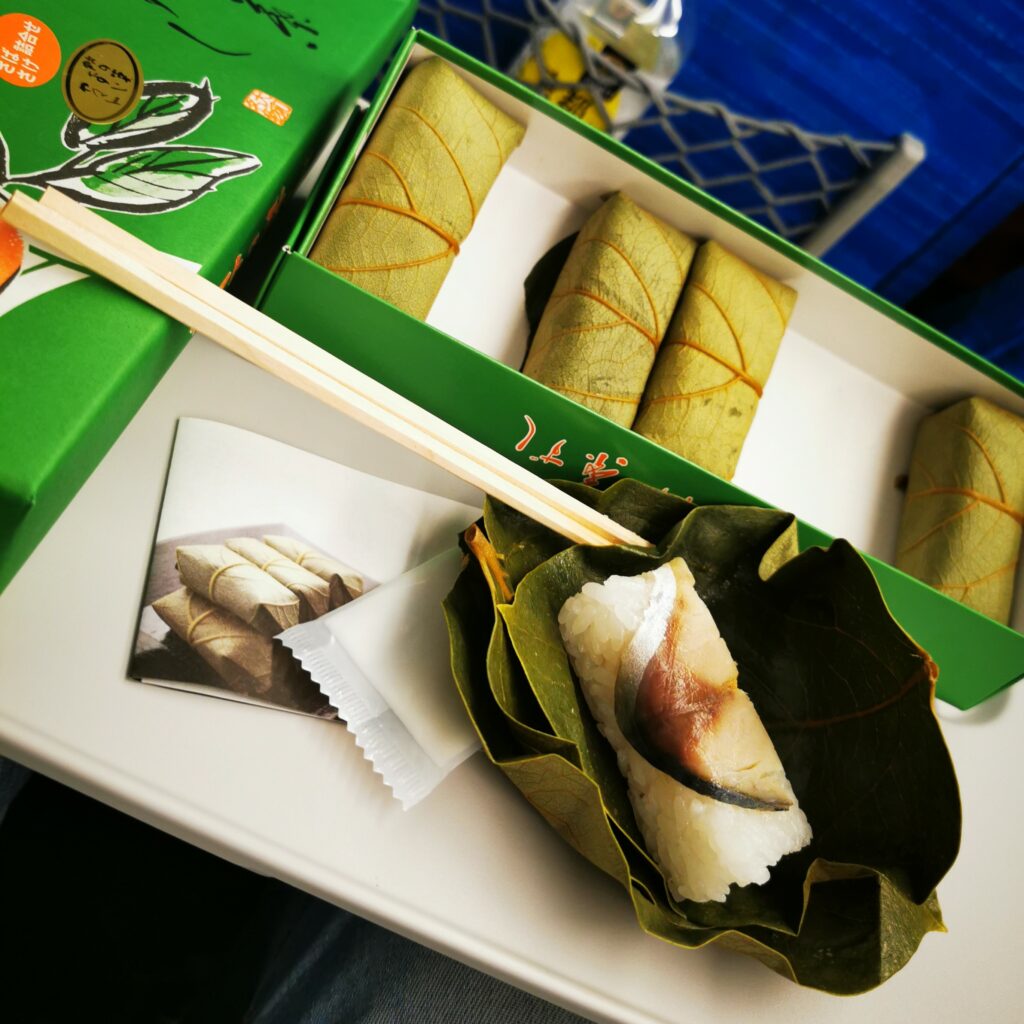
Thus, in Kyoto you can find the famous mackerel sushi wrapped in its bamboo leaf or the assortment of sushi from the famous century-old Rokusei store.
If you are passing through Fukuoka, you might be tempted by Kashiwa meshi かしわめし or spiced rice, which beautifully combines chicken, carrots and shiitake.
Meeting around the Ekiben
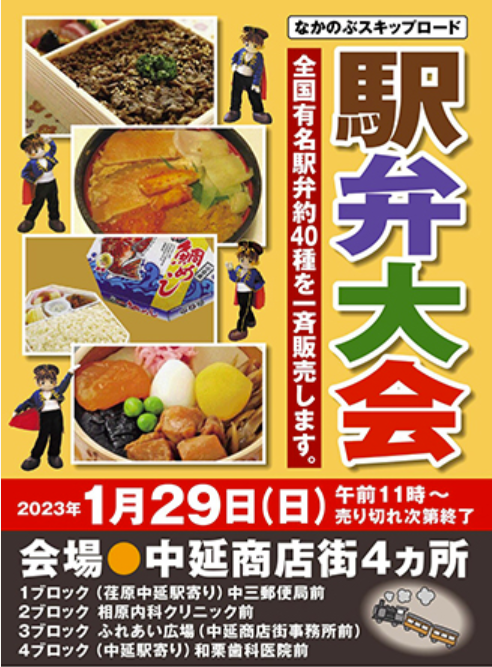
A gathering focused on Ekiben and regional bento boxes is being held this Sunday, January 29th, a short walk from Nakanobo Station and on the shopping street of the same name. Sales and tastings will begin at 11:00 AM. Spread across four booths, you can sample 40 different types of Ekiben, each with its own distinctive character and flavors that are sure to transport you.
But be warned, there won't be enough for everyone!
You will find, for example:
Trout sushi from Toyama prefecture for 1600 yen, which is around 11 euros.
Kobe tenpayaki bento for less than 1400 yen.
The Hakone region pork fillet and rib bento for 1180 yen.