The Japanese language is full of concepts and expressions that are sometimes amusing, sometimes surprising, sometimes poetic. Let's take a look!
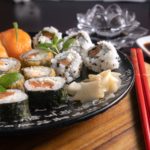 Itadakimasu (いただきます)
It expresses appreciation for the person who prepared the meal or gratitude to nature for what it has produced (an animistic version of saying grace, in short). Undoubtedly the most well-known Japanese expression, yet often misinterpreted. Spoken before a meal, it is often mistaken for our "bon appétit" when it actually means "I humbly receive.".
 Otsukare (お疲れ)
An essential expression heard from morning till night, especially in the office. It's used to acknowledge the efforts of others and validate their work.
 Kuchisabishi (口寂しい)
Literally "lonely mouth", a concept that defines the need to put something in one's mouth without actually needing to (for example, eating or chewing without being hungry).
 Bimyou (微妙)
This expression is used when something (an act, a work, an action, etc.) leaves a mixed, rather negative feeling. For example, one might say that relations between Japan and Korea are 微妙 (twice-twisted), because they are somewhat ambiguous.
 Shinrinyoku (森林浴)
A contemplative and poetic expression that evokes a very common relaxation practice in Japan, consisting of enjoying the energy provided by the forest (through its light or smells, for example).