Kōyō, or Momiji (紅葉), is the autumnal equivalent of Sakura for the Japanese. Instead of the traditional Hanami (花見), a picnic while viewing cherry blossoms, the Japanese engage in what could be translated as "hunting for red leaves" or "color change" (紅葉狩り, Momiji Gari, with Gari meaning "hunting"). But unlike the cherry blossoms in spring, which change color in autumn affects a vast number of species, Kōyō is a phenomenon that affects a single tree. The result is a gradient of vibrant colors, ranging from the bright, golden yellow of Ginkgo leaves to the dazzling red of Momiji (Japanese maple).
What is the origin of this craze? How can you find the best places to observe this phenomenon and when is the best time? We will answer all these questions in this article, starting with the best places to enjoy it outside of Tokyo.
Origin
This phenomenon has been described for many centuries in ancestral collections and depicted by the greatest Japanese painters and Haiku masters.
The words referring to "autumn leaves" (紅葉) first appear in the Manyoshu (万葉集), the oldest surviving collection of Waka poetry in Japan. This suggests that the observation of autumn leaves and the attraction to their colors has existed for approximately 1,200 years and that their beauty was already known during the Nara period (710-794).
However, this activity was far from being as important as cherry blossom viewing or viewing the flowers of Mount Fuji (Wisteria) among the nobles of the Heian period. Indeed, it required venturing into the mountains and away from gardens and residences, which some believe explains this difference in popularity. It wasn't until the Edo period that this activity became popular with the general public, influenced by events such as the Ise-ko (pilgrimage to the Ise Grand Shrine) and the Kumano-mode (pilgrimage to the Kumano Mountains). One of the first tourist guides or "magazines" directing visitors to places of interest near cities, such as the "Miyako Meisho-zu-ai" (都名勝図会), also appeared.
More than just a hobby
There are many ways to enjoy autumn and its warm, vibrant colors. The most popular is to visit a temple or Shinto shrine, like the Japanese of the Edo period, which often boast centuries-old trees. You can also enjoy the Koyo (autumn foliage) at one of Japan's many onsen (hot springs) and ryokan (traditional Japanese inns) while relaxing in a hot spring. Finally, another popular activity is driving. This may seem surprising, but for many Japanese, using a car, especially in the city, is a rare occurrence. Therefore, a drive to the mountains or countryside is a much-appreciated activity. This is especially true in autumn when the roads are ablaze with yellow and orange hues dotted with the red of the Momiji (autumn leaves).
Kōyō in Nikko
First stop, Nikko, undoubtedly the most famous and popular destination for Japanese and foreign tourists visiting Tokyo. Nikko is a two-hour train ride from the center of the Japanese capital. Expect to pay around €40 for a round trip, but you'll need to change to a bus to reach the lake and waterfalls in the upper valley.
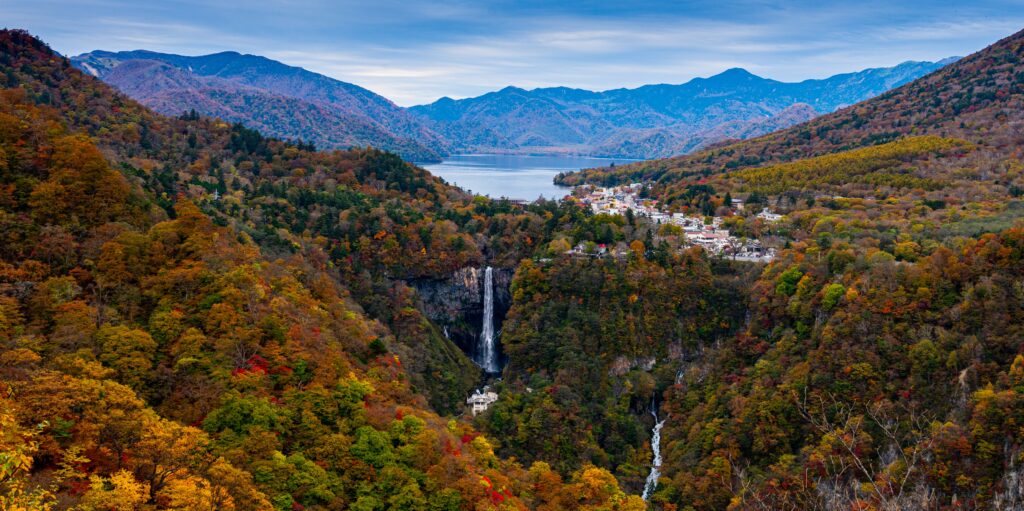
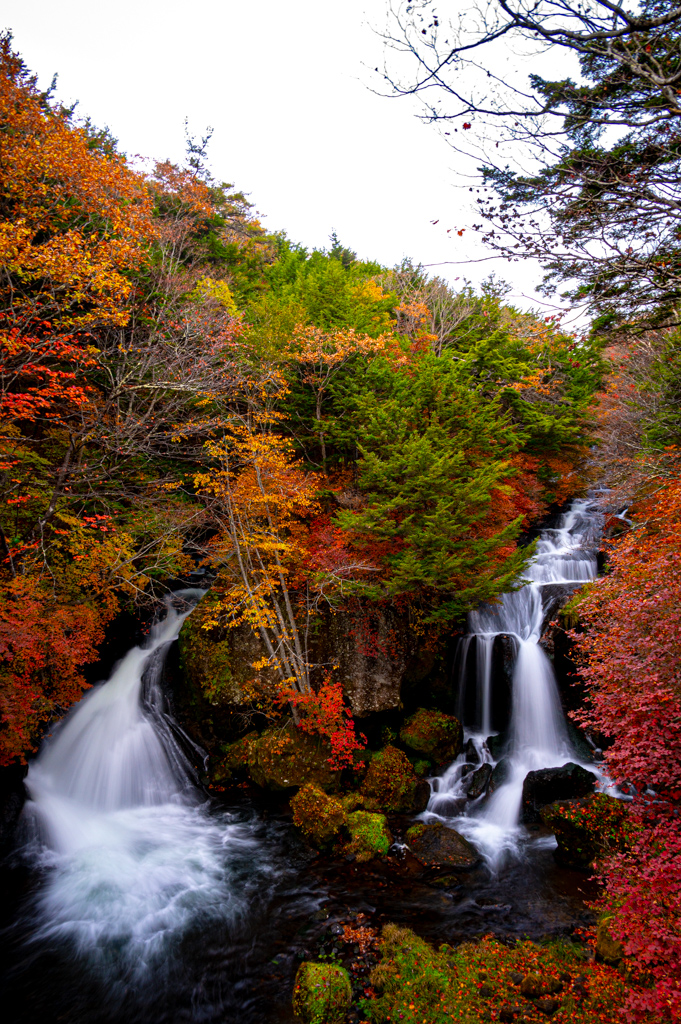
The upper part of the city encompasses Lake Chuzenji and Mount Nantai, which bears a striking resemblance to Mount Fuji. Numerous waterfalls and viewpoints offer breathtaking spectacles. Slightly out of sync with the peak season for the autumn foliage, the lower part of the city is primarily known for its shrine housing the remains of Tokugawa Ieyasu, the Shogun who founded the Edo period, and its many shrines along the north bank of the Daiya River.
Our recommendations:
– Lake Chuzenji 中禅寺湖
– Kegon Waterfall and Ryuzu 華厳の滝 竜頭の滝
– Toshogu Temple東照宮
– Hangestuyma Observatory (photo above) 半月山の展望台
– Old Shinkyo Bridge 神橋
Best time to spend:
Upper Nikko: early October / late October. Lower Nikko: late October / mid-November
Fukushima and its lakes
Since the devastating earthquake that struck Japan in 2011, the name Fukushima has held a special significance for a large majority of French people. Beyond this image, the prefecture is full of magnificent places and landscapes, particularly in its mountainous region of Aizu.
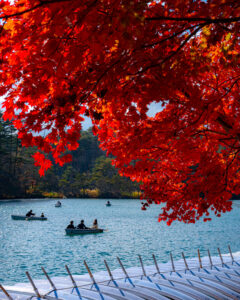
Located a 3-hour drive from Tokyo, begin your journey at Lake Inawashiro, which opens the door to Mount Bandai and numerous mountain roads that are particularly pleasant to travel in autumn. Once you reach the plateau, you have a choice of a dozen turquoise ponds created following the 1888 eruption.
A short trip in a pedal boat or rowboat under the red Momiji trees will not leave you indifferent.
Our recommendations:
– Goshikinuma Ponds 五色沼
– Shingu Kumano shrine新宮熊野神社
– Tadami River Railway Bridge 第一只見川橋梁à
– Driving along mountain roads
Best time: Mid-October / mid-November
Niigata and its rice paddies
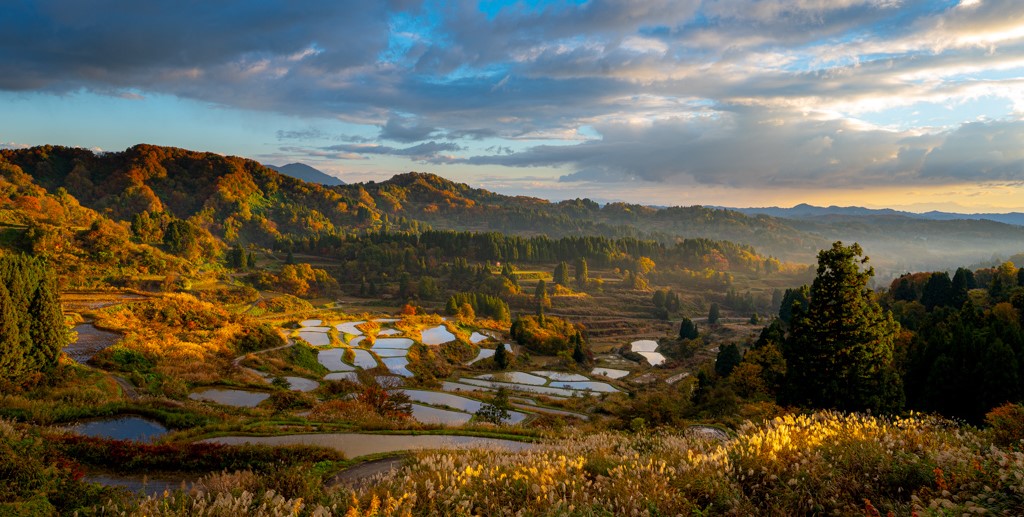
Boasting the heaviest snowfall on Japan's main island of Honshu, Niigata is renowned for its winter resorts, which rival those of the Alps and Pyrenees, and for its centuries-old hot springs, such as the Tsubame onsen. Another of the prefecture's attractions is its impressive number of terraced rice paddies. Once autumn arrives, these terraces transform into a mirror, offering a mystical spectacle with the morning mist and the red-orange hues of the Kōyō (autumn foliage) and the rising sun.
Our recommendations
– Kiyotsu Gorges 清津峡
– Hoshitoge rice paddy星峠の棚田
– Yahiko Park 弥彦公園
Best time: Mid-October / early November