After the bōnenkai 忘年会, shinnenkai 新年会 and other excesses of the holiday season, it's time to go green!
On January 7th, we prepare nanakusa gayu 七草粥, a traditional "detox" recipe consisting of a mixture of rice porridge and 7 plants and vegetables with various medicinal properties.
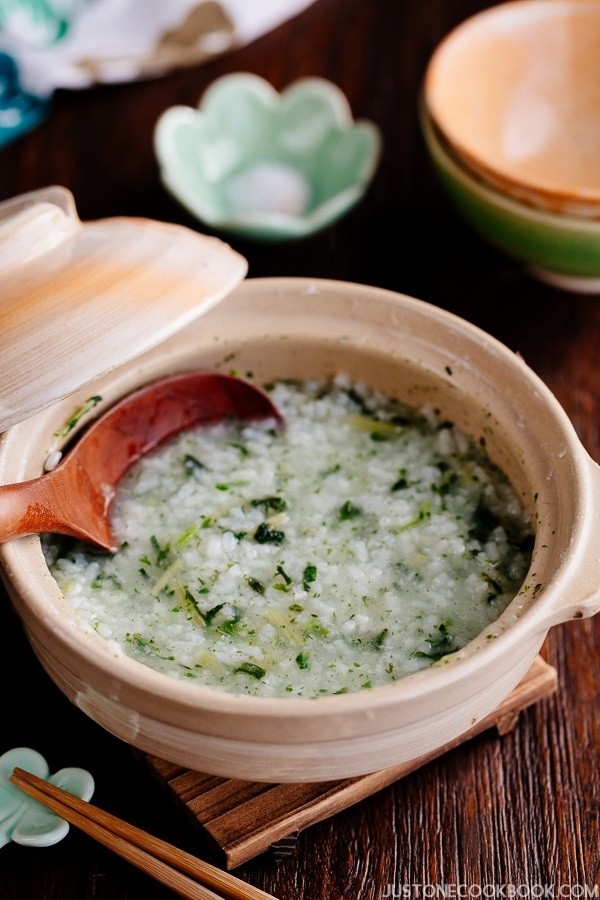
Photo: https://www.justonecookbook.com/nanakusa-gayu-seven-herb-rice-porridge/
This custom, of Chinese origin, is believed to have been introduced to Japan during the Heian period (794-1185) and to have become popular during the Edo period (1603-1867), eventually becoming a national holiday. Today, Nanakusa Gayu (七草粥), which is traditionally celebrated on January 7th of each new year, is one of the five major Japanese seasonal festivals (gosekku 五節句).
- Jinjitsu or the festival of the seven herbs on January 7th (7/1)
- Hinamatsuri, the doll festival or the girls' festival on March 3rd (3/3)
- Kodomo no hi or Children's Day on May 5th (5/5)
- Tanabata or the Star Festival on July 7th (7/7)
- Kiku no sekku or the chrysanthemum festival on September 9th (9/9)
The custom was to gather the plants the night before, then chop them while singing or reciting this phrase: «"Before the birds of the Tang dynasty fly to Japan, I chop the seven herbs.", to protect future crops from birds. The freshness of the first shoots was believed to bring vigor and health.
Today, you can find the famous nanakusa (七草) at the supermarket. The herbs used may vary from region to region, but the commonly used species are:
- Water dropwort or Chinese celery (seri, 芹),
- Shepherd's purse (nazuna, 薺),
- Gnaphalium (gogyō, 御形),
- Morgeline (hakobera, 繁縷),
- Common lampsane (hotokenoza, 仏の座),
- Garden turnip (suzuna, 菘),
- Japanese radish (suzushiro, 蘿蔔).
While the traditional recipe aims to cleanse the body, consuming nanakusa gayu 七草粥 is also believed to bring luck and good health.
Do you have these herbs (or edible equivalents) on hand? The recipe is simple! Once the herbs are chopped, add them to the boiled rice and mix everything together. The mixture is then ladled into bowls.
Itadakimasu 頂きます!