
The incredible Tokyo Skytree (東京スカイツリー, Tōkyō Sukaitsurī) has just celebrated its 10th anniversary. This is a good opportunity to revisit this building, which has become one of the symbols of the Japanese capital!
The Tokyo Skytree in numbers
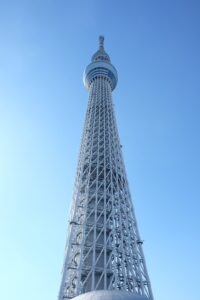
634The height in meters of the Tokyo Skytree. The number "634" is easy to remember because it can be read as "Musashi," a word very familiar to the Japanese. It also refers to Musashi Province, which is the former name of the large region that encompassed part of Tokyo, Saitama, and Kanagawa.
1 325The number of days of construction, from the start to the end of the work (July 14, 2008 – February 29, 2012). The peak height of 634 meters was reached one week after the March 2011 earthquake. A (slightly) biased comparison: our Eiffel Tower was built in just 2 years, 2 months, and 5 days!
2 523The number of steps from the 1st to the 445th floor. From the 1st floor to the Tembo Deck (340th floor), there are 1,929 steps. From the Tembo Deck to the Tembo Galleria (445th floor), there are an additional 594 steps. For comparison, the Eiffel Tower has "only" 1,665 steps, from the esplanade to the summit!
36 000 The total weight in tonnes of the tower's steel framework, including the observation deck. The Eiffel Tower looks tiny next to the Skytree: it weighs only 7,300 tonnes!
Design
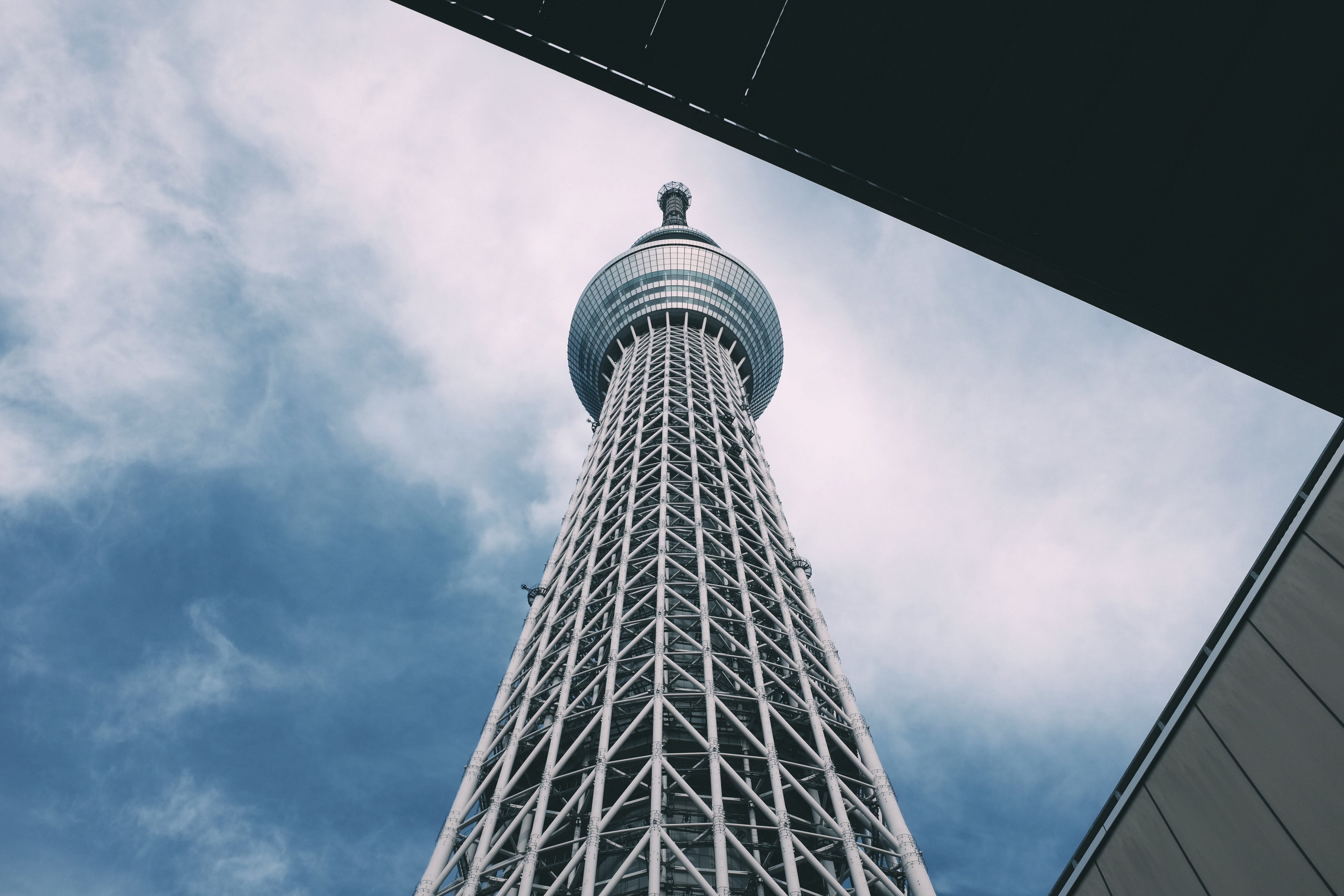
The colossal Tokyo Skytree opened to the public on May 22, 2012. Initially planned to reach 610 meters, it ultimately stands at 634 meters, nearly double the height of the Tokyo Tower (332.6 meters). Its three legs provide maximum stability and greater resistance to earthquakes. Its cylindrical shape offers better wind resistance. The Tokyo Skytree is the tallest broadcasting tower in the world and the third tallest building overall, after the Burj Khalifa in Dubai (828 m) and Merdeka 118 in Kuala Lumpur (678.9 m). It surpasses the Shanghai Tower by a mere 2 meters.
Name
From October 26 to November 25, 2007, Tokyoites were able to submit their suggestions for naming the tower, which was then simply called "New Tokyo Tower" (新東京タワー, Shin Tokyo tawā). On March 19, 2008, the six possible final names were announced:
- Tokyo Edo Tower (東京EDOタワー, Tokyo Edo Tawa) ;
- Tokyo Skytree (東京スカイツリー, Tokyo Sukaitsurī) ;
- Mirai Tower (みらいタワー, Mirai Tawā) ;
- Yumemi Yagura (ゆめみやぐら);
- Rising East Tower (ライジングイーストタワー, Raijingu Īsuto Tawā) ;
- Rising Tower (ライジングタワー, Raijingu Tawā).
Tokyo residents were invited to vote and the final name of the tower was announced on June 10, 2008: it would be Tokyo Skytree!
Construction
Because Tokyo Tower was overshadowed by the numerous skyscrapers surrounding it, a new, even larger broadcasting tower was needed, hence the building's gigantic size. The construction of the Tokyo Skytree took four years by the firm Nikken Sekkei and required over €550 million in funding from numerous private investors, including Tobu (a transportation company) and NHK (a broadcasting company), to name just a few.
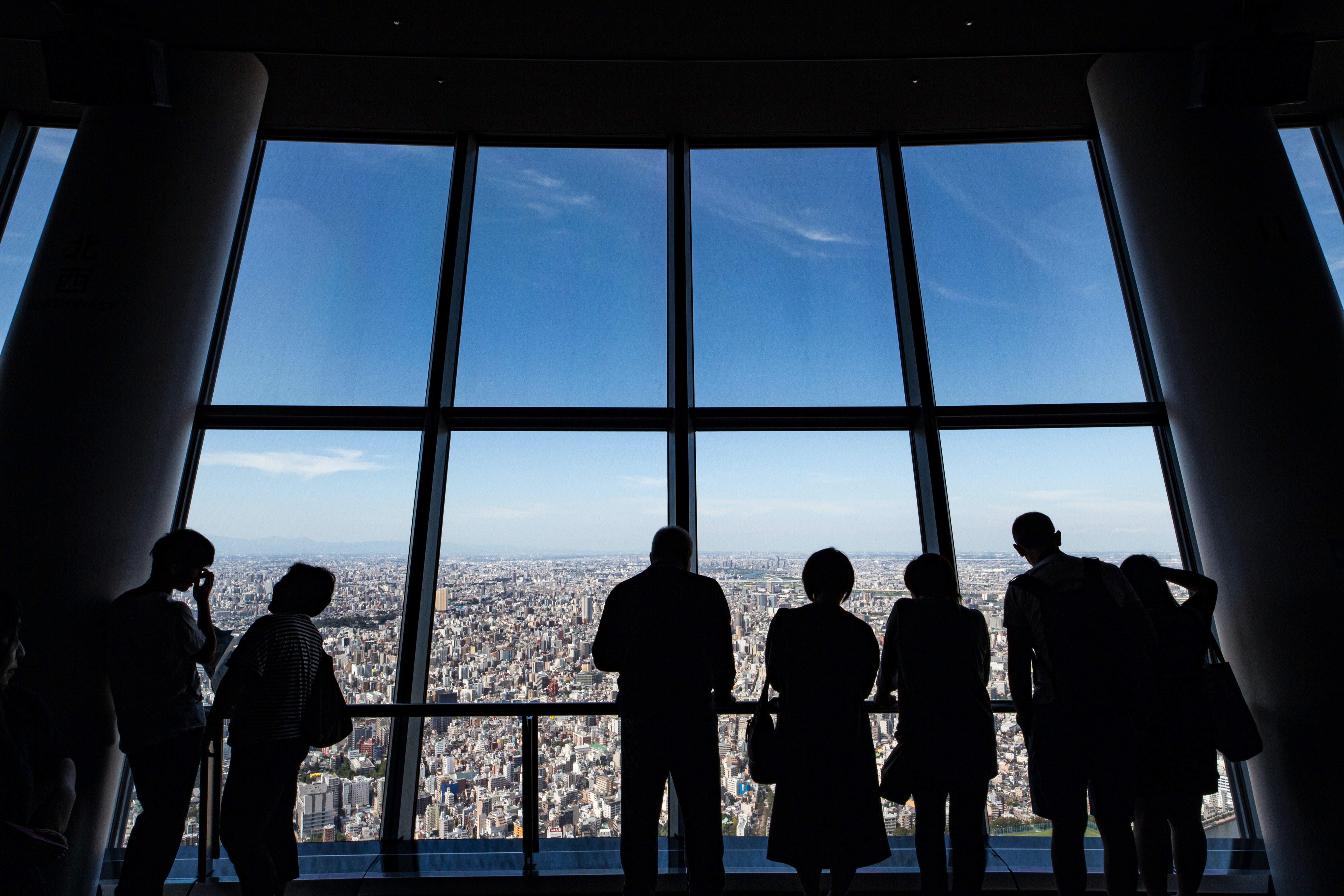
This construction has been beneficial for the entire neighborhood, which has undergone a €1 billion revitalization. Today, the Tokyo Skytree is a true microcosm. It has everything: two observation decks (at 350 and 450 meters; a 110-meter-long glass floor in the Galleria allows visitors to experience the illusion of levitation), an aquarium, a planetarium, and the Sora Machi shopping complex (空街, literally "sky city") with over 300 shops and restaurants. You can easily spend an entire day there without getting bored! To stay up-to-date on the tower's news, feel free to check out the [website/link]. official website (page available in English).
The Skytree, symbol of Tokyo
More than just a tourist attraction, the Tokyo Skytree has become one of the capital's iconic symbols. Like the Eiffel Tower, it lights up brilliantly to mark major events in the life of Tokyo, Japan, and even the world. Tens of millions of visitors flock there every year to enjoy breathtaking views of the capital. And to commemorate your visit to the tallest tower in the archipelago, a mailbox is located on Tembo Deck Floor 345. It's the perfect opportunity to send a postcard to your family and friends as a souvenir of your visit!
And for photography enthusiasts, you should know that it's possible to take exceptional photos of a phenomenon known as the Diamond Skytree for a few days in October, when the sun directly overhead. A spectacular sight guaranteed!
Practical information
Tokyo Skytree Station is accessible via the Tobu Skytree Line from Asakusa. It is located at the base of the tower complex. Alternatively, you can take the Toei Asakusa and Hanzomon subway lines or the Keisei Oshiage Line to Oshiage Station. If you'd like to enjoy a stroll, the tower is a 20-minute walk from Asakusa, across the river.
For those who wish to go all the way to the top, the entrance and ticket counters are on the fourth floor of Tokyo Skytree Town.
Tickets to visit both observatories cost ¥3,100 on weekdays and ¥3,400 on weekends and holidays. A ticket to the 350th floor costs ¥2,100/¥2,300. A ticket to go directly to the 450th floor costs ¥1,000/¥1,100. Discounts are available for those up to 17 years old.
![[Japon Pratique] 5 chaînes de restaurants à découvrir](https://espaceprof.com/wp-content/uploads/2021/06/thomas-marban-EHK-EH1SRzQ-unsplash-scaled-1-400x300.jpg)